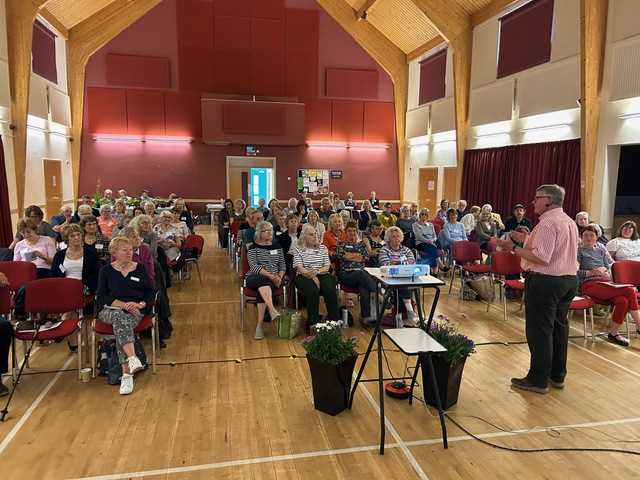

What persuaded 80 keen gardeners to spend a whole day indoors, happily, on the hottest, most beautiful spring day of the year so far? It had to be the Hardy Plant Society Essex Group’s Lecture Day and what a privilege it was to be part of it.
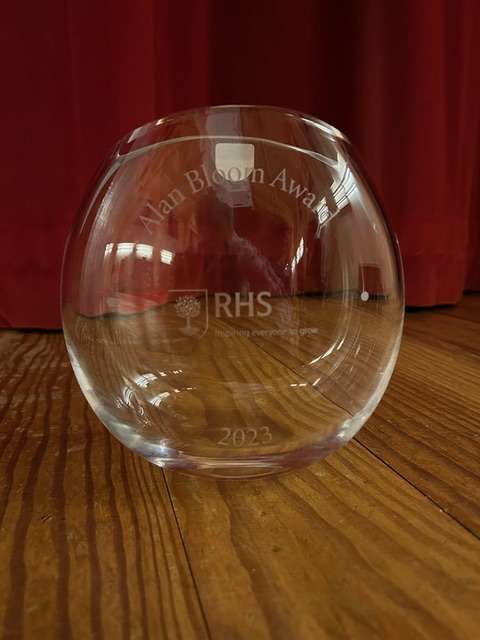
You realised from the very beginning the quality we could expect, when former HPS Chair, Cathy Rollinson, now chair of the RHS Herbaceous Plant Committee, started the day by presenting the Alan Bloom Award for a lifetime’s achievement in horticulture to David Ward who recently retired after 40 years at Beth Chatto’s Plants and Gardens.
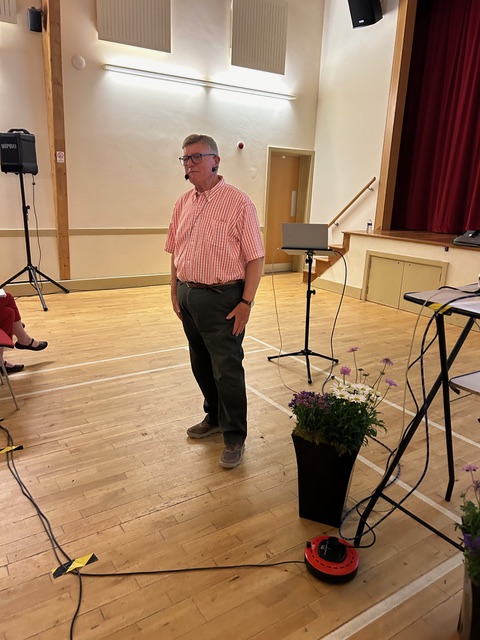
Colin Moat recently closed Pineview Plants, but shows little intention of retiring. His advocacy of the taller plants (ie those over one metre in height) for the herbaceous or mixed border demonstrated his intimate knowledge of these plants and the conditions in which they thrive. For me, a relative newcomer, it was thrilling to be introduced to white sanguisorbas. As Joanne Philip said in her vote of thanks, Colin showed those of us who think we have run out of space in our gardens that we can still increase vertically.
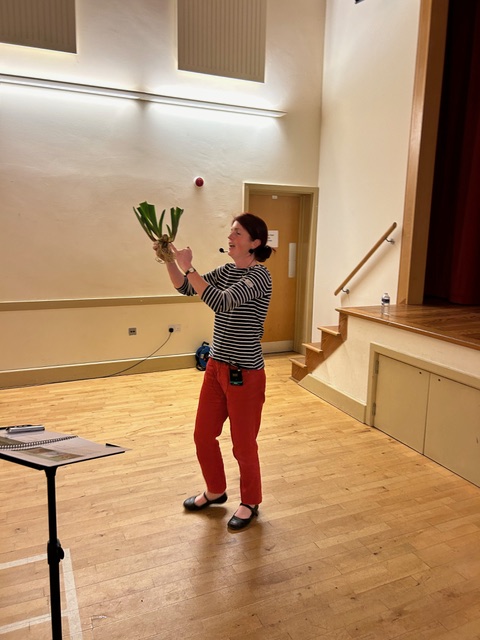
Luci Skinner was a returning speaker, and I soon learnt why. She covered the entire Iris genus, comprehensively and clearly, in one hour, and its place within the Iridaceae. Perhaps it was the bearded irises that interested most of us, because they are suited to neutral to alkaline soil, which is typical of so much of East Anglia. In covering the whole genus, Luci showed us how it was possible to have irises flowering throughout the year. For a grower of Iris danfordiae and the reticulatas it was useful to learn that these need a lot of phosphorus through the winter, as do the winter irises, Iris lazica which prefers a moister soil, and Iris Iguicularis which wants a hot dry sunny spot. the. For those who like Iris pseudacorus it was good to know that it is better behaved in the border than in the wet.
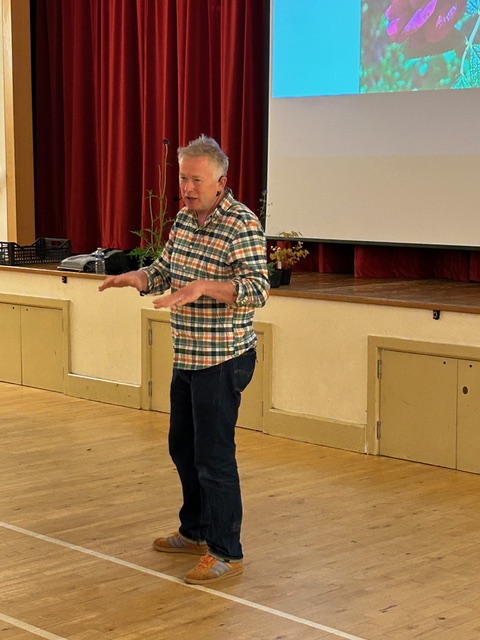
I shall not try to cover Toby Buckland’s virtuoso performance in any detail. Speaking without notes for well over an hour, he managed to engage with the audience, finding out and addressing our peculiar garden delights, frustrations, triumphs, or sheer selfishness (“What do you do with your slugs – over the neighbours wall?” Murmurs of assent.) He used his slides, an eclectic selection of plants, as prompts for an outpouring of enthusiasm, experience and advice. I am sure everyone took away their own nugget. For me it was, trim the taproot of your Erysimum to get a bushy plant.
The HPS Essex Group plant sales table offered plants of an unusual, even for us, quality and we were lucky to have Daisy Roots, Woottens Nursery and Pineview Plants as well. Such was the enthusiasm of the audience to buy plants, it was hard to say who went away more satisfied, the nursery people or their customers.
The volunteers who staffed reception, the raffle, plant sales, the sound system, setting up, and catering were a well-oiled machine, and thanks to their professionalism everyone could relax, enjoy the day, learn and be entertained.It all proves the value of experience.
The success of the day owed most to our longest serving committee members to whom I express profound thanks. If Linda Crowther meant to end her chairmanship by giving us all something to remember, she couldn’t have done it with a bigger bang!
Tom Fenton, Chair
 Essex HPS